Gothic vs Old English Fonts: What's the Difference?
Learn the differences between Gothic and Old English fonts, including their styles, history, readability, and best uses in modern designs.
Gothic and Old English fonts are popular choices for designs that need a bold, classic, or medieval look. You may have seen them in tattoos, clothing designs, logos, gaming usernames, and social media bios.
Although these styles share similar features, they are not always the same. Their letter shapes, decorative details, and historical influences can help you tell them apart.
What Are Gothic Fonts?
Gothic fonts are lettering styles known for their bold strokes, sharp edges, and decorative details. Many Gothic styles have narrow letters and dramatic shapes that give text a dark, medieval, or traditional appearance.
Gothic lettering is associated with blackletter typography, a style that developed in medieval Europe. However, modern Gothic fonts can also include more contemporary designs inspired by this traditional lettering.
For example, Gothic-style Unicode text may look like this:
- Regular text: Gothic Font
- Fancy text: 𝒢𝑜𝓉𝒽𝒾𝒸 𝐹𝑜𝓃𝓉
- Bold Gothic text: 𝖌𝖔𝖙𝖍𝖎𝖈 𝖋𝖔𝖓𝖙
These styles are useful for creating dramatic headings, decorative usernames, tattoo designs, and themed graphics.
What Are Old English Fonts?
Old English fonts are lettering styles inspired by historical English blackletter writing. They often feature elaborate strokes, pointed shapes, and decorative curves. Their appearance is closely associated with medieval manuscripts and traditional calligraphy.
Old English lettering is commonly used to create a classic, formal, or vintage look. You may find it in tattoo designs, clothing graphics, certificates, and traditional logos.
Here are some Unicode examples that resemble Old English lettering:
- Regular text: Old English Font
- Fancy text: 𝔒𝔩𝔡 𝔈𝔫𝔤𝔩𝔦𝔰𝔥 𝔉𝔬𝔫𝔱
- Bold text: 𝕺𝖑𝖉 𝕰𝖓𝖌𝖑𝖎𝖘𝖍 𝕱𝖔𝖓𝖙
These Unicode styles can be copied into supported text fields, such as social media bios and usernames. However, they are special characters rather than conventional font files, and their appearance may vary between platforms.
Get Gothic and Old English fonts with Fantasy Font Generator
You do not need to install separate fonts to give your text a Gothic or Old English look. You can use Fantasy Font Generator to transform regular text into decorative styles in a few simple steps.
This platform has both Gothic Font Generator and Old English Font Generator tools. Here’s how you can use them:
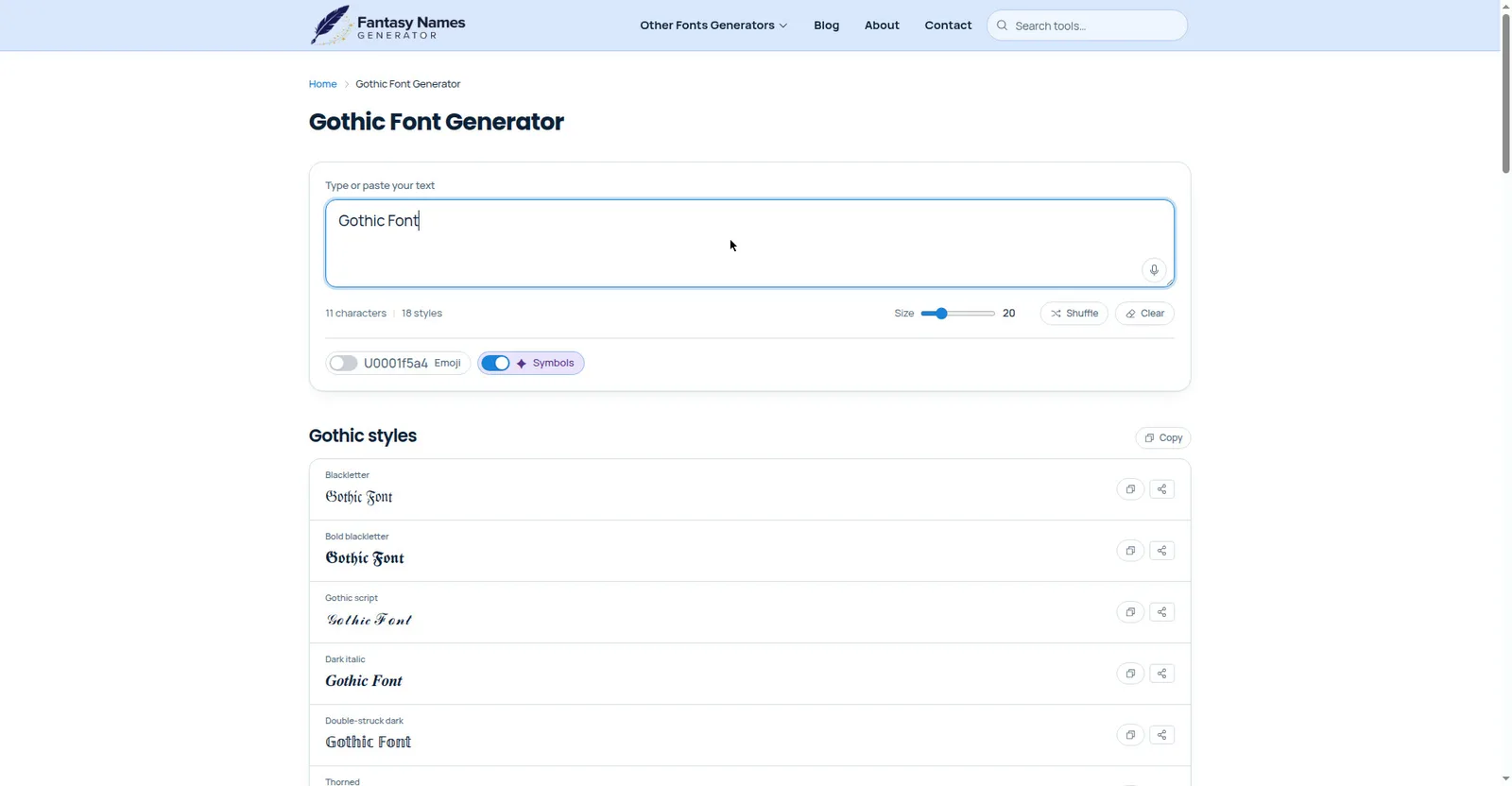
- Type a name, word, or short phrase into the input box.
- Browse the generated styles to find Gothic or Old English lettering you like.
- Copy your favorite style with one click.
- Paste the text into your social media bio, gaming username, message, or design project.
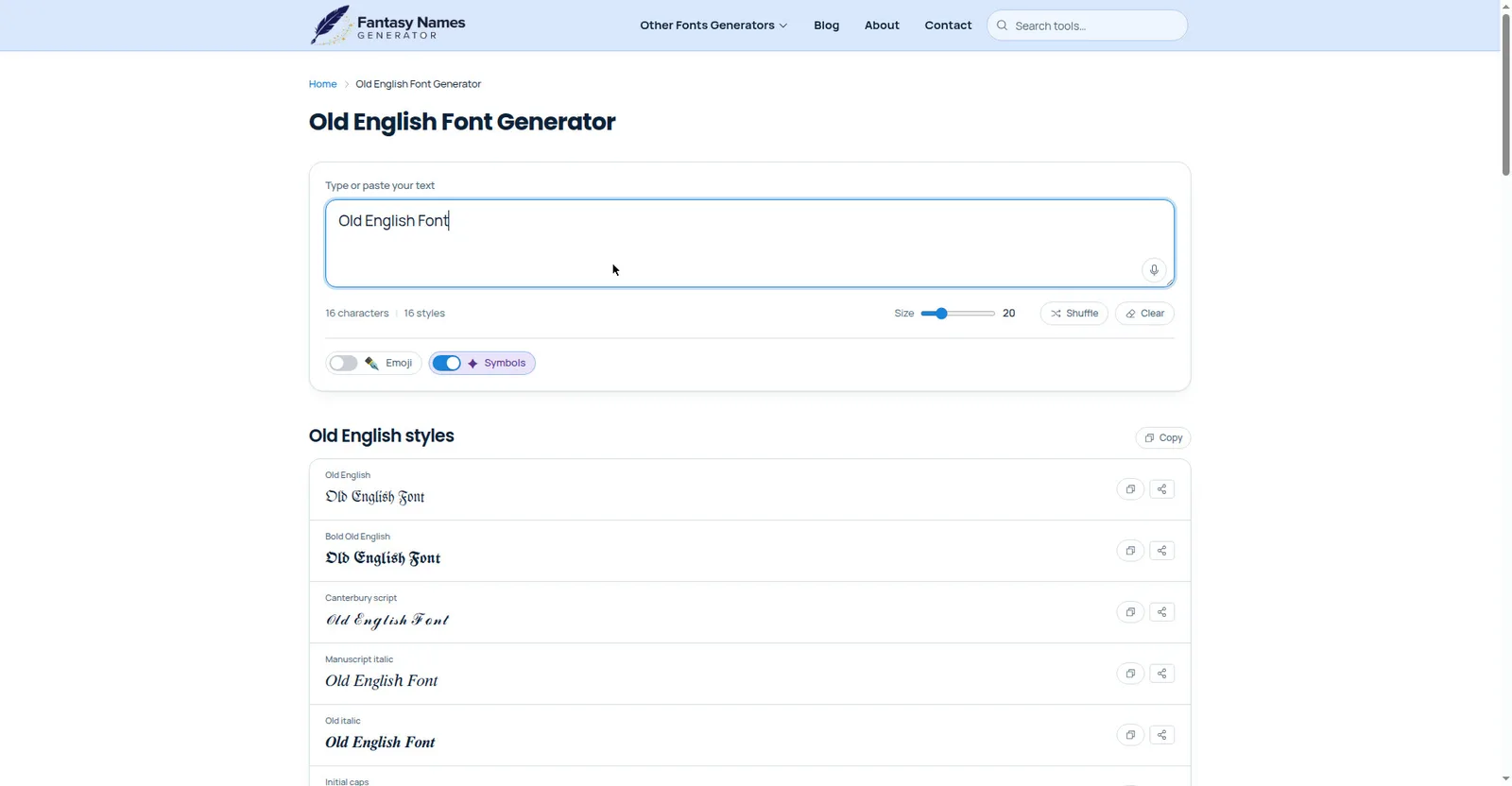
The tool makes it easy to compare different styles without manually changing each letter. Keep in mind that the results may use Unicode characters rather than traditional font files, so their appearance and compatibility can vary across platforms.
Gothic vs Old English Fonts: Key Differences
Gothic and Old English fonts share several visual features, but they are not always used in the same way. The main differences become clearer when you compare their letter designs, appearance, history, and applications.
Letter Shapes and Design
Gothic fonts generally feature strong strokes, angular shapes, and narrow letterforms. Some styles look simple and heavy, while others include elaborate decorations. The exact design depends on the particular Gothic style.
Old English fonts usually have more traditional calligraphic details. Their letters may include curved strokes, ornamental lines, and distinctive flourishes that give them a historical appearance.
Both styles can look similar because Old English lettering belongs to the broader blackletter tradition often associated with Gothic typography.
Readability and Appearance
Gothic fonts can look bold, dramatic, and sometimes dark. Their readability depends on the design. Simpler styles may work well for short headings, while highly decorative lettering can be difficult to read in longer passages.
Old English fonts often have a formal and ornate appearance. Their detailed letterforms can make short words stand out, but they may also become difficult to recognize when used in small sizes or long sentences.
For both styles, it is best to use decorative lettering for short text rather than large blocks of content.
Historical Origins
Gothic lettering is connected to medieval European writing traditions. Blackletter scripts became widely used in Western Europe during the Middle Ages, especially in handwritten manuscripts and early printed books.
Old English lettering is also associated with historical blackletter forms. Despite its name, the modern Old English font style is not simply the original writing system used for the Old English language. Instead, it refers to a decorative lettering style inspired by historical forms.
Therefore, the two styles share a historical connection, although the terms are often used differently in modern design.
Are Gothic and Old English Fonts the Same?
Gothic and Old English fonts are closely related, but the terms are not always interchangeable. Gothic is a broad term that can describe several styles inspired by blackletter lettering, while Old English usually refers to a more specific traditional-looking style within that visual tradition.
In everyday design, people sometimes use both terms to describe similar fonts. This is why a font labeled Gothic may look almost identical to one labeled Old English.
The distinction is not always strict. Instead of relying only on a font's name, compare its letter shapes, decorative details, and overall appearance to find the style that suits your needs.
Best Uses for Gothic Fonts
Gothic fonts are a good choice when you want your text to look bold, dramatic, or edgy. Their sharp letter shapes and heavy strokes help create a strong visual effect.
Common uses for Gothic fonts include:
- Music artwork: Create bold designs for metal bands, album covers, and music posters.
- Gaming usernames: Give your gaming name a dark or powerful appearance.
- Social media bios: Add a distinctive style to short profile text, such as 𝕲𝖔𝖙𝖍𝖎𝖈 𝕾𝖙𝖞𝖑𝖊.
- Alternative fashion: Use Gothic lettering on clothing graphics, merchandise, and brand designs.
- Dark-themed graphics: Make posters, event invitations, and artwork look dramatic.
Best Uses for Old English Fonts
Old English fonts work well when you want a traditional, classic, or decorative appearance. Their detailed letterforms are especially suitable for designs inspired by historical lettering.
Common uses for Old English fonts include:
- Tattoo lettering: Create traditional-looking designs featuring names, meaningful words, or short phrases.
- Clothing designs: Add a classic blackletter style to T-shirts, hoodies, and other apparel.
- Vintage logos: Give a brand name a traditional or heritage-inspired appearance.
- Decorative headings: Make titles and short phrases stand out in certificates, invitations, and posters.
- Social media text: Style names or short profile phrases using Unicode characters, such as 𝕺𝖑𝖉 𝕰𝖓𝖌𝖑𝖎𝖘𝖍.
Both styles can work for similar projects, so compare their letter shapes and overall appearance before choosing one.
Final Words
Gothic and Old English fonts share a blackletter background, which is why they often look alike. Gothic fonts can offer a broader range of bold and dramatic styles, while Old English fonts usually emphasize traditional and decorative lettering.
Neither style is automatically better than the other. Compare their letter shapes and choose the one that matches your design. For social media text, you can also try Unicode examples to see how each style looks before using it.